Abstract
This article examines the complex ethical dimensions of photographing indigenous peoples, with particular focus on the visual representation of the Korubo, a recently contacted indigenous group in the Brazilian Amazon. Drawing on fieldwork experience and visual anthropology theory, the analysis interrogates the power dynamics embedded in the production, circulation, and consumption of images of indigenous communities.
Key Findings
- Photographic representation of indigenous peoples remains deeply entangled with colonial visual traditions and their power asymmetries
- The concept of “informed consent” requires fundamental rethinking when applied to communities with limited experience of global image circulation
- Indigenous communities are increasingly developing their own visual self-representation practices and asserting control over their image
- Media demand for “exotic” imagery creates economic incentives that can compromise ethical practice
- Visual sovereignty — the right of indigenous peoples to control their own image — is emerging as a key ethical principle
Fieldwork Context
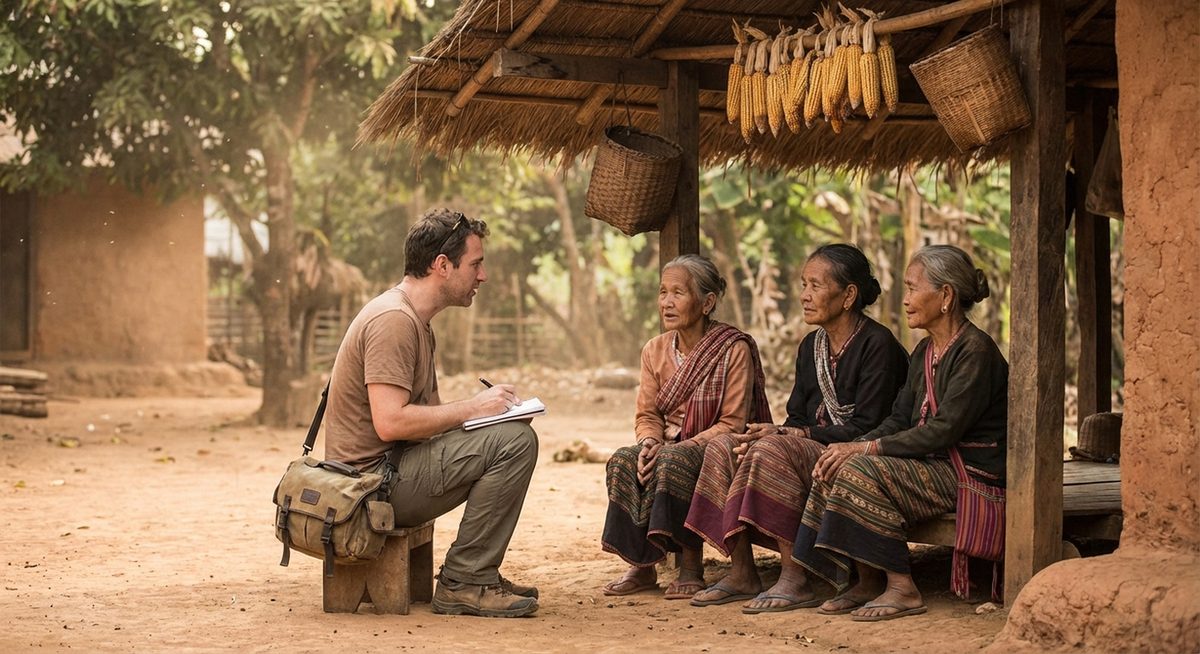
The article draws on the author’s extensive fieldwork with the Korubo people in the Vale do Javari Indigenous Territory, one of the most remote regions of the Brazilian Amazon. The Korubo established peaceful contact with FUNAI (Brazil’s indigenous affairs agency) only in the 1990s, making the ethical dimensions of visual documentation particularly acute.
Theoretical Framework
The analysis engages with theories of visual anthropology, postcolonial critique, and indigenous rights to develop an ethical framework for photographic practice with indigenous communities. Key concepts include visual sovereignty, reciprocal image-making, and decolonising the gaze.
Implications
The article provides practical guidelines for ethical visual research with indigenous communities and contributes to broader debates about representation, consent, and the politics of visibility in anthropological research. These guidelines are relevant for researchers, journalists, and documentary filmmakers working with indigenous peoples worldwide.